Tag: Sci-fi

  • Age of Samurai–A stunning docudrama

    Age of Samurai–A stunning docudrama

    If you haven’t watched Netflix’s Age of Samurai: Battle for Japan, you should. I highly recommend it. It is not just visually stunning, but this docudrama has all the action and intensity of a well-written fictional epic. It is about as far as you can get from boring history lessons and well worth your time.

    The series

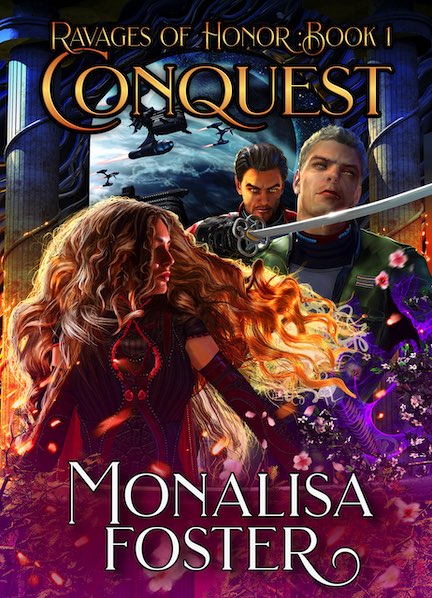
    One of the narrators is Stephen Turnbull*, is an “old friend” of mine. It was his book, Samurai: The Story of Japan’s Greatest Warriors, that I picked up when waiting for my kids to finish up at the library. It is one of the three books (the second one being on genetic engineering and the third being on nanotechnology) responsible for the Ravages of Honor series.

    Not only are the narrators experts in their fields, this dramatized account of history emphasizes the relationships between the people making history, rather than dry, pedantic statistics related to dates, troop movements, and other non-sense that is likely to be forgotten the moment it’s not needed for a test.

    Great acting, wonderful stories, amazing characters, my only complaint is that it is only six episodes of forty-five minutes each when it could be much longer.

    Noteworthy

    So much of what I was seeing in this docudrama resonated with me, that I started taking notes, mostly ones that might be of use for further stories in my Ravages of Honor universe.

    In case you’re new, my space opera series features genetically engineering warriors modeled — you guessed it — on the samurai. But it doesn’t just stop at the swords and honor codes. My writing also relies rather heavily on my favorite romantic trope–enemies-to-lovers.

    When genres blur

    One of the more interesting things about the enemies-to-lovers trope is that Jane Austen* is credited with creating it, via her most famous work, Pride and Prejudice*.

    As someone who didn’t grow up in the entitled First World where marrying for love, infatuation, or just hooking up was a valid thing, I’ve always found this interesting. History is full of stories where men and women married not just strangers, or people they didn’t love, but people who were their actual enemies.

    This is why I used the enemies-to-lovers trope in Ravages of Honor, not because I was going for some Regency in space.

    I used it because it’s hardwired into the samurai history I used as background for the donai. The marriages and concubinal arragements of this period (and others throughout history) precedes the Regency period and its ballrooms by centuries.

    Austen may have popularized enemies-to-lovers, but she didn’t invent it, and it saddens me to see what has been tradition throughout most of human history relegated to second place because we have no knowledge (or appreciation) of why these things happened. It means all the struggles and sacrifices of the people (usually women, but men as well) caught between duty, honor, and passion has been forgotten.

    The Ravages of Honor series, has far more in common with feudal Japan than it does with the ballrooms of Regency England. So, while the sparks, tension, and forbidden fruit of the enemies-to-lovers trope runs strong not just in Conquest but in the rest of the series, it is based on the political intrigues of a feudal culture, not ballroom dances and the matchmaking aspirations of mothers.

    So, if you like Byronic heroes (Mr. Darcy was one), actual strong women (like Elizabeth Bennett), but want to trade the gossip and manipulations of the Regency era for political alliances where millions of lives are at stake, where freedom and survival on a planetary scale are hang in the balance, where the ravages of honor are borne by grace and strength, then I hope you’ll give my take on the enemies-to-lovers trope a try.
    *As an Amazon Associate I earn from qualifying purchases.

  • John Carter of Mars: A Much Needed Character Evolution

    John Carter of Mars: A Much Needed Character Evolution

    The John Carter (2012) * movie with Taylor Kitsch somehow almost missed me. Retrospectively we know that Disney killed the box office success of this movie and the reasons for that have been documented elsewhere and will not be rehashed here. (If you’re curious, here’s a video I found very informative.)

    Given my history with Edgar Rice Burroughs‘* works, I can’t help but wonder if this excellent film (yes, I said it) would have been something I would have bothered with when it was released. They say that you never get a second chance to make a first impression, but I did nevertheless give this character a second chance.

    Some background:

    First, so you understand where I am coming from, I was never a 13-year-old boy or a young man for that matter. I don’t think I was ever the intended audience for this and not just because ERB published this in 1917 and the writing is so dated that the story is painful to read. And I know that it inspired a lot of people. That does not change that it is dated, and I’m not talking about the prose.

    But I loved the movie and a friend’s post on Facebook got me thinking about why the movie spoke to me in a way that ERB’s writing never could. I will admit that while Taylor Kitsch is easy on the eyes I do in fact consistently reject eye-candy-based movies if they are poorly done. And while the production design and special effects were excellent, again, plenty of other movies with the same window dressing fail to make my list.

    “Oh, Gary-Stu, you saved me!”

    So, I subjected myself, once more to ERB’s writing, confirming, once again, that it was his writing that did not appeal. Now, when we speak of writing, we are talking about two things. One is prose. The other is everything but the prose, i.e. the characterization, pacing, description, and so on. (And please don’t rail at me about giving the book another chance; I’m a writer with limited time and since what I’m reading can have a detrimental effect on my own writing, that is not a bullet I’m willing to take for you).

    It is the characters in the book that are lacking. This review of ERB’s version is right on:

    Amazon review

    ERB’s John Carter is a Gary-Stu, an infallible character, a piece of animated cardboard lacking in depth. And I also realize that for some people, that is the appeal. Why else would Hollywood and Disney be tripping all over themselves for the last decade or more to bring us the female version of Gary-Stu, the Mary-Sue character? (If you’re one of those, you may want to stop reading here because I’m about to piss you off.)

    Here is the one time that Disney took something and made it better. And then they squandered it.

    Why the movie is so much better:


    So, what made it better? What did Disney do right? Well, for one they made the Powell character an adversary (in the book he was Carter’s mining partner). By doing so, the movie reset the tone to one of high stakes and character complexity. As I said, I couldn’t make myself re-read all of ERB’s story, but I did re-read this part and it struck me as an excellent move in revamping the characters.

    The other thing they did was make John Carter a real person, not someone who struts around thinking about how (or showing off how) utterly perfect he is. And I admit a prejudice against such characters, whether ERB’s or not.

    To wit… One of the things that absolutely makes me put a book down is the Retief character (Laumer’s BOLO series.) Laumer’s character is fresher in mind than John Carter (I had to re-read him more recently) but I remember thinking of John Carter when I read Laumer and just groaning when Retief takes out an alien using some clever method that only he knew but didn’t reveal until it was time to congratulate himself for being oh-so-clever.


    Let me be a bit more explicit here with an example:


    Gary-Stu, our intrepid hero finds himself at the bottom of a pit. The author actually has Gary-Stu going “Oh no! However will I get out?” Gary-Stu may or may not have more thoughts about how incredibly high the walls are, or how dangerous it is for him to remain here. Then the author leaves us hanging.

    So off we go, waiting a whole week for the next installment, or the next chapter, or like today, it’s just a matter of turning the page. And when we do, Gary-Stu flexes his muscles and just leaps out of that pit like he was planning on doing all along, because he knew he could do it (he is Gary-Stu after all) so him wondering “Oh no! However will I get out?” wasn’t a genuine thought at all, but the author jerking off on the page.

    And if you just went, “Ewww….” then you know exactly how I feel every time I read one of these contrived gotchas, and then how I feel when I have to read the vomit-inducing follow-up that includes some self-congratulatory drivel started by some other character. “Oh, Gary-Stu, you’re my hero. Thank you for saving us.” or better yet, “Oh, Gary-Stu, you’re my hero. I’m all yours. Take me. Take me here, take me now.”

    It’s always about characters:

    By making John Carter a widower who had lost his wife and child, who had lost his soul, whose outlook of life and humanity was grim, Disney took ERB’s Gary-Stu and made him into a relatable, likable character who could be progressed. At the end of the movie he is a different person and it was that arc that made the movie John Carter someone I liked and want more of. The book John Carter would have been just as shallow, no matter the special effects or casting because he would still be a Gary-Stu, ready to go on his next adventure where he remained the same shallow Gary-Stu he was at the start.

    I’m not going to talk too much about the rewriting of Dejah Thoris since I couldn’t read far enough into ERB’s text to do a fair comparison. I suspect that movie Dejah is very much unlike book Dejah, a female character written for 13-yo boys reading in 1917. I didn’t find the movie character to be a Mary-Sue. In fact, I liked her very much. She had both strengths and weaknesses, had a great character arc, and she and John working together to win is very refreshing in a world where many franchises take the male title character, gut and castrate him, and then have the female character be the real “hero.”

    If you’re willing to suspend disbelief and accept that this is not the Mars we know today and was never meant to be the Mars of today, but a fantasy (rather than sci-fi) Mars, this movie is well worth your time. It has action, adventure, and romance, albeit a Disney-level romance. I loved the Tars Tarkas character (“Your spirit annoys me”), the Sola and Kantos Kan characters–all of it. The only thing I did not love about this movie is the fact that they didn’t make a sequel and that there is no Woola plushie.

    *As an Amazon Associate I earn from qualifying purchases.

  • Excerpt from Resilience, coming June 7, 2022 in Robosoldiers

    Excerpt from Resilience, coming June 7, 2022 in Robosoldiers

    When Stephen Lawson* asked me to be part of his new Baen* anthology, Robosoldiers* an anthology about augmented soldiers and military robotics I wasn’t sure what I was going to end up writing. Unlike all the militarily credentialed co-authors in this anthology (some of these guys are real heavy hitters) I am the fork-and-knife school variant, if even that. I don’t have any military service or credentials. Country of origin did matter in the mid-1980s when I was still a cadet and aspiring to be more. The more was out of reach for many reasons, including the peace dividend that came out of the fall of the Berlin wall, a good thing.

    My experiences have been on the other side of conflict–the civilians, the refugees, the collateral damage. I was born and grew up behind the Iron Curtain. I didn’t realize just how meaningless those two words had become until recently when a clerk asked me where “the incident” took place and I said “behind the Iron Curtain.” Without batting an eyelash she asked me the date and address so that she could request the medical records. I guess she was thinking it was a night club or something and maybe an ambulance or hospital was involved because she certainly gave no indication that she actually understood what she was asking for. When I related her request to close friends they suggested I give her the address of Ceaucescu’s grave or perhaps that of the Sighetul Marmatiei Memorial Museum for Communism Victims. I maintain that it would still be lost on her (and her ilk).

    Stephen did jokingly tell me what he didn’t want (I am first and foremost a romance writer, whether that means romance or Romance) which is always helpful. So for those of you who read me primarily for my romances, know that Resilience* is not a Romance or a love story, although I could not resist working in a slight romantic angle at the end.

    Readers and fans of mil-sf, like readers and fans of all other genres, are always clamoring for something new. For something different. So I gave it to them. In case I haven’t said it, Stephen, thanks for affording me this opportunity because you knew going into it that it was going to be different and let me play anyway.


    What doesn’t kill you makes you stronger. Or so they say. 

    They are full of shit.

    But then again, philosophy has never been my strong suit.

    Shrug.

    My scars are the first thing people notice about me. Even as they avoid noticing, looking anywhere but my face, the scars define me in their eyes. 

    Not my rank—Sergeant.

    Not my name—Engel, Karlie.

    Not my uniform—Air Force.

    It took me awhile to get used to the locked gazes, the way people’s eyes would unwaveringly lock onto mine because eyes are supposed to be safe.

    “It’s not your fault.”

    I know it’s not. 

    One of the more annoying things about my PTSD implant (or my anti-PTSD implant as the doctors would like me to think of it) was the way it—oops, I’m supposed to think of the intelligent agent as “she”—talked to me. It wasn’t its fault. It was the way “she” was programmed. She goes by Nicki. It’s supposed to be a “she” because female rape survivors are paired up with female counselors. Something about trust.

    Like so many sailors, soldiers, marines, and airmen—I was never really alone in this—I was a casualty of war. Wrong place. Wrong time. 

    As far as billets went, a military air traffic controller in Germany was about as safe an assignment as possible. I wasn’t going into a war zone or into combat. 

    Unfortunately no one told the bad guys. And they wouldn’t have cared. I was alone and unarmed. I hadn’t even been in uniform. Just another tourist as far as they were concerned. That is, until they found my ID.

    “Ground yourself in the present,” Nicki said. Her voice was always calm, hypnotic, meant to be soothing, and supposedly tailored just for me.

    I took a deep breath, held it, and then let it out slowly to a count of four, my belly rising, my hand against my chest. It was supposed to be calming, part of a set of coping mechanism that I’d been taught. I did it to shut Nicki down. It—she—always booted up when my hypothalamic–pituitary–adrenal axis kicked into overdrive. I hated that I knew that term. I shouldn’t have to know what an HPA-axis was.

    About two years ago, I was recruited for a clinical trial to help test brain implant technology. Never my favorite thing, the MRI was even less so after my month of captivity. The jack-hammer sounds of the magnet were too reminiscent of gunfire, the having to lay still too reminiscent of being bound to a bed, the voices drifting in over the speakers too much like their disembodied voices as I escaped into my head while I lay helpless underneath them. 

    And having to relive it all so the MRI could map my brain was no picnic either. 

    “This is a flashback. It’s not real,” Nicki reassured me.

    It had been with me for about a year. Nicki controlled the circuitry—fine wires much smaller than a human hair—running through my brain and I had benefited from some of the physical stuff the implant does. Thanks to the mapping done by the MRIs, the implant knows which parts of my brain become active during a flashback. It keeps track not just of my pulse and temperature and respiration, but a bunch of other stuff. I stopped trying to figure it out. All I needed to know was that high levels of certain chemicals were bad and low were good and that the implant stimulates parts of the brain to counteract them. And then Nicki activates.

    It—she—is a little bit like the imaginary friend a kid might have: completely real to me, right down to the way she “smells.” There’s a light blue halo all around her, something the designers put in, so that I wouldn’t think she was an actual person I was seeing. Thank God for small favors.

    It has appeared to me as different people. I’ll be watching TV and find a character I connect with and poof, Nicki takes on her form, her mannerism, her facial expressions. She sounds like the character too, which bothers me far more than the other things. I think it was the blindfold. They kept it on almost the entire time. 

    So, I’ve stopped watching television shows or movies. I’d always been more of a reader anyway, but after a few months, she started manifesting as the female characters in my imagination, so she robbed me of that too.

    “Where are you, Karlie?” Nicki asked.

    The kitchen. I’m in the kitchen.

    “What are you doing?”

    Boiling water.

    Except that there was no longer water in the pot. It was gone and the pot was giving off a metallic smell reminiscent of the way guns smell as they heat up. All that was missing was the sulfur and that too kicked in, a phantom scent courtesy of my memory. 

    With a trembling hand, I shut off the burner and leaned against the kitchen counter so I wouldn’t curl up on the ground. Once again, I’d become lost in the white-noise of boiling water. The last thing I remembered was standing over the stove, watching the first bubbles form along the pot’s bottom.

    I’d wanted pasta with butter and garlic.

    But not anymore.


    *As an Amazon Associate I earn from qualifying purchases.

  • Sci-fi Giveaway

    Are you ready for some new adventures? Check out the great ebooks featured here and get a chance to win some paperbacks and ebooks while you’re at it.

  • Ravages of Honor pronunciation guide

    I’m a logophile. My Spotify playlist is made up of songs in German, Japanese, Korean, Russian, Hungarian, Norwegian, Icelandic, Mongolian, Latin, French, and Italian.

    One of the reasons I love writing science fiction is that it allows me to make up words and use language in a creative way. I love making up words and names, but not all of them are original, even if they sound that way.

    So, if you were wondering about how to pronounce the unique names and terms I’ve created (and what the stories behind them are) you might enjoy the Ravages of Honor pronunciation guide. Each episode is very short (30 seconds to 1 minute long). I will be adding to it, so please remember to subscribe to my channel so that YouTube will notify you of additions.

    Click here for the pronunciation playlist.

    Pronunciation Guide
  • Excerpt from “Good of the Many”

    Excerpt from “Good of the Many”

    I’m very excited to share with you the opening of my short story, Good of the Many, released today in Worldbreakers, an anthology edited by Tony Daniel and Christopher Rucchio.

    Dedication

    Greater love hath no man…in recognition of the brave souls, Peter Wang, Alaina Petty, and Martin Duque. You embraced your duty sooner than you should have had to.

    There’s nothing quite like walking into a tomb, although technically—I guess—it’s not. We’re not exactly underground or under a church, even though storage unit six is part of the UENS Sanctuary (T-AH-1749) and her motto is “For the good of the many.”

    That must make stasis pod 06-004 a crypt. No, that also didn’t fit. No one—not one of the hundreds of citizens—inside Sanctuary were dead. Technically.

    There were two dozen sealed pods inside unit six, each one twice as wide and deep as a coffin, but not twice as long. My steps echoed as I made my way down the rows and rows of pods, trailing a pool of light cast by a lantern floating off my right shoulder. Its repulsor field made a barely audible hum as its weak light cast long shadows. Shadows that slithered in a place where nothing had moved since I was here exactly one year ago.

    I shuddered, my skin crawling and dimpling into goosebumps that raised the hairs on my arms.

    Get hold of yourself, Elena.

    (more…)
  • Hard sci-fi made me cry*

    Hard sci-fi made me cry*

    Image Source: IMDB

    Tired of the remakes, the reboots, the “let’s see how much more blood we can squeeze out of this turnip” output of today’s Hollywood? I think you’ll find Passengers* a refreshing change. 

    If like me, you didn’t rush out to see it in the theatre, it might’ve been because of blurbs like this one from IMDB: “A spacecraft traveling to a distant colony planet and transporting thousands of people has a malfunction in its sleep chambers. As a result, two passengers are awakened 90 years early.” 

    Sounds like a snore, doesn’t it? 

    It is rated PG-13, just under two hours long, and tagged as adventure, drama, and romance. What it is, however, is a story about love, redemption, and forgiveness. It’s about making the best of life, even when things don’t go as planned. It’s about the pioneering spirit, about a positive future, about what a man and a woman can achieve together.

    “But wait, you said this is hard sci-fi.”

    Yes, I did. And I stand by it. It’s science fiction because of the setting: a spaceship traveling between the stars. It’s hard sci-fi because it’s an extrapolation of current knowledge (it’s closer to 2001: A Space Odyssey), than to the space-fantasy cum turnip known as Star Wars

    But what this movie actually is, is a great example of using science/setting as a trope and a literary device for delivering a character-focused story. The science is not the point of the story, but there is enough verisimilitude that it has a real feel to it (this comes from someone who can get really picky about the scientific details).

    (more…)
  • Dolus Magnus: The Great Hoax re-released today

    Dolus Magnus: The Great Hoax re-released today

    Scientists predicted catastrophe, telling us that hurricanes would become more frequent. Their allies in the media waited with baited [not a typo] breath for disaster to strike.
    After all, if it bleeds, it leads, and there’s nothing like a major weather event to take advantage of for more funding and for ratings.
    Again and again these predictions, these calls of “Doom, doom, we’re killing the planet,” have been used to get us to accept higher taxes, more regulations, and more control over our lives.
     
    When the weather doesn’t comply, as with Hurricane Florence, reporters pretend that they’re being battered by high winds in order to sell catastrophe. But no matter how much they spin and outright lie, climate models are GIGO (garbage in, garbage out).
     
    This is a timely article because today I’m re-releasing my short story about the hoax of climate change, “Dolus Magnus: The Great Hoax” as a standalone. I think you’ll enjoy this short story’s quick peek into human nature, the realities of science, and the positive message contained.
     

    Sign up for my mailing list and get it for FREE.

  • SSTOs and the law

    Esteemed space lawyer and fellow sci-fi writer, Laura Montgomery, reverse-lawyers (i.e. reverse engineers) the realities and legalities of launching vehicles into space on her blog.

    Her excellent review of Promethea Invicta looks at the real world path set up by Congress. A path that, like so many Congressional acts, delegates the actual rule-making and regulation to other entities, such as the Secretary of Transportation. Ultimately, it’s the Federal Aviation Administration (FAA) that issues the needed licenses and permits.

    Her Ground Based Space Matters Blog is an excellent resource for anyone that wants to learn more about private space activity, the FAA, NASA, and associated agencies.

    The multi-talented Ms. Montgomery also writes excellent sci-fi. Her latest release, called Like A Continental Soldier, (Book 3 of the Waking Late series) just came out. Take a look at her author page and check out her other works.


  • Promethea Invicta, ready to rock-n-roll

    Promethea Invicta, ready to rock-n-roll

    I’m very excited to announce that my hard sci-fi novella, Promethea Invicta, is out.

    The Sovereign Republic of Texas of 2071 is no longer part of what used to be the United States. But it is still bound by the treaties it inherited, including the Outer Space Treaty.

    Theia Rhodos is ready to free humanity from the shackles that keep lunar resources out of her reach. She’s done taking “no” for an answer and she’s ready to sacrifice everything.

    And her enemies are ready to let her.

    Everything in life has a cost. And a price.

    Available as from your favorite book seller, as well as through libraries (via Overdrive and Bibliotheca).